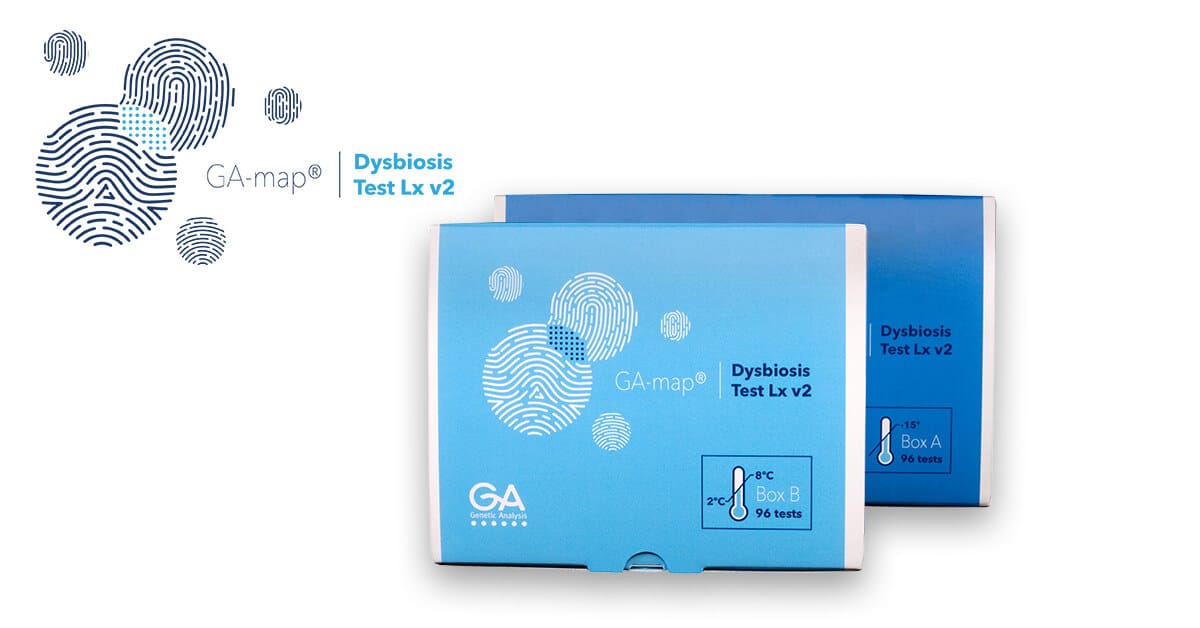
What is GA-map® Dysbiosis Test?
GA-map® Dysbiosis Test is a gut microbiota analysis platform that uses DNA analysis to characterise the human gut microbiota and identify imbalances in the microbiome compared to a stable, healthy reference population. It has been validated using independent cohorts of clinically validated healthy volunteers, IBS and IBD patients, and provides a simplified and standardised approach to gut microbiota profiling in research and clinical settings.
How is dysbiosis determined?
Dysbiosis is determined by comparing the relative abundance of bacteria that are clinically relevant in health and disease, to that of healthy individuals. The GA-map Dysbiosis Test does this by deploying 48 bacterial markers, targeting over 300 bacteria on different taxonomic levels, to characterise the gut microbiota from a stool sample. These specific markers have been selected based on their ability to distinguish between a healthy balanced microbiota and a state of dysbiosis. The resulting profile of bacteria (abundance and diversity) is compared to that of a healthy population to determine the presence and degree of dysbiosis.
Can I set up the GA-map® Dysbiosis Test in my lab?
Yes. Our tech-transfer service enables customers to run the GA-map® Dysbiosis Test from their own lab, enabling them to deliver microbiome testing using a robust and documented tool. Our ‘white glove’ service includes a comprehensive, hands-on approach including installation, setup and training led by in-house experts who provide full support through the entire adoption and verification process, significantly reducing the onboarding and set up time. This makes the adoption process smooth, simple and cost effective.
What is the result turnaround time for GA-map® Dysbiosis Test?
The GA-map® Dysbiosis Test typically takes 1-2 days depending on the chosen workflow, and because the test results are generated utilising the clinically validated GA-map® software algorithm, results are immediate without the need for further bioinformatic work.
What information does the GA-map® Dysbiosis Test provide?
The GA-map® Dysbiosis Test provides information on the different types and quantities of bacteria in the gut microbiome. Exploiting the 16S gene (variable regions V3-V9) it enables better recognition of bacteria on low taxonomic levels and covers a range of bacteria (over 300 bacteria on different taxonomic levels). It also identifies imbalances in the Gut microbiota and provides functional profiles based on those relevant bacteria identified.
How can I use the results of the GA-map® Dysbiosis Test to improve my patients’ gut health?
The GA-map® Dysbiosis Test provides a personalised Gut microbiota profile based on the individual’s sample and compares this to a healthy reference population to obtain clinically meaningful results. The results can be used to make personalised recommendations (for example dietary changes, prebiotic, antibiotic and probiotic supplementation, and lifestyle modifications) to restore microbial balance and improve gut health.
Is dysbiosis the same as IBS?
Dysbiosis and Irritable Bowel Syndrome (IBS) are not the same, but they can be related. Dysbiosis refers to an imbalance in the gut microbiome, whereas IBS is a functional gastrointestinal disorder that causes a group of symptoms, including abdominal pain, bloating, and changes in bowel habits. Dysbiosis can be a contributing factor to IBS, but not all people with dysbiosis will develop IBS and vice versa, however studies have shown that around 70% of individuals with IBS have dysbiosis.
What is the difference between dysbiosis and leaky gut?
Dysbiosis refers to an imbalance in the bacteria that make up the gut microbiota, while leaky gut refers to an increase in intestinal epithelium permeability when the barrier function of the gut becomes compromised. There are three components to the epithelium barrier, of which the gut microbiota is the inner-most layer. If this barrier becomes compromised in any way, e.g. as a result of dysbiosis, the highly regulated process of trans-epithelial transport can break down.
What causes gut dysbiosis?
Gut dysbiosis occurs when there is an imbalance in the gut microbiota, which can result from a decrease in beneficial bacteria, and increase in potentially harmful bacteria or an overall reduction in microbial diversity in the gut. These types of gut dysbiosis can be triggered by a variety of factors, including environmental factors such as diet, lifestyle, hygiene and medications, and host-specific factors such as genetics, diseases and infections, and stress.
What are the consequences of dysbiosis?
Gut dysbiosis has been linked to a range of health conditions and it can have mild to serious health implications associated with a range of disorders. Disrupting the balance of bacteria in the gut can cause gastrointestinal disorders, metabolic diseases, autoimmune disease and allergy and psychological disorders. For example, gut microbiota imbalances are associated with digestive and systemic symptoms, including IBS and functional gastrointestinal disorders, alternating bowel habits, inflammation (e.g. inflammatory bowel disease), cancer, obesity, type 2 diabetes, fatigue and mental health disorders.
What diseases are associated with gut dysbiosis?
Some of the diseases associated with gut dysbiosis include inflammatory bowel disease (IBD), irritable bowel syndrome (IBS), colorectal cancer, obesity, and type 2 diabetes.