Skip to content
Back To Our Shop

Peptest

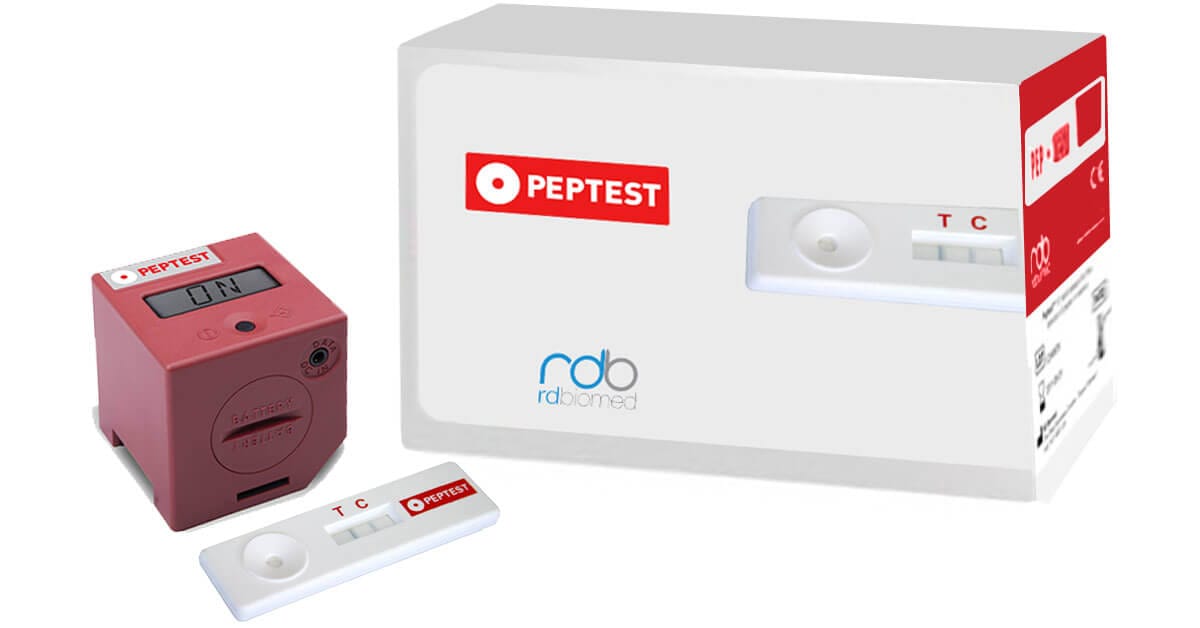
Peptest is an innovative, non-invasive diagnostic test to help identify reflux, and is especially critical in detecting silent reflux. Based on lateral flow technology, Peptest detects the presence of pepsin in clinical samples from the upper digestive and respiratory tracts.

Category:

Key Advantages

Simple sample collection followed by a rapid 15-minute test, enabling fast and appropriate treatment

Non-invasive first-line test for gastroesophageal reflux disease and silent reflux

Differential diagnosis in patients with non-specific symptoms

Compatible with a wide range of samples, e.g. saliva, sputum, tracheal aspirate, oesophageal aspiration, gastric juice, exhaled air condensate and bronchoalveolar fluid

Beneficial to gastroenterology, ENT and respiratory specialists

Diagnose extraoesophageal reflux with peptest

Peptest is a state-of-the-art diagnostic tool that offers a non-invasive approach to identifying reflux, particularly in the case of extraoesophageal and silent reflux. Using innovative lateral flow technology, Peptest can detect the presence of pepsin in clinical samples from the upper digestive and respiratory tracts, providing a reliable and objective test for reflux.

The benefits of Peptest extend beyond identifying reflux alone, it can also be used to help optimise and evaluate response to treatment and evaluate the underlying causes of symptoms. Peptest could therefore assist healthcare professionals in developing effective and tailored care and treatment plans to improve patients’ health outcomes.

What is gastroesophageal reflux disease?

Gastroesophageal reflux disease (GORD) is a common condition that affects the digestive system. It occurs when stomach acid and other contents of the stomach flow back up into the oesophagus, causing heartburn and other symptoms. GORD is a chronic form of acid reflux and can cause symptoms such as chest pain, difficulty swallowing, and a sour taste in the mouth.

If left untreated, reflux can cause serious complications such as inflammation of the oesophagus (oesophagitis), scarring and narrowing of the oesophagus (strictures), and precancerous changes to the lining of the oesophagus (Barrett’s oesophagus). GORD can also increase the risk of developing asthma and sleep apnoea.

What is Peptest?

Peptest is a non-invasive diagnostic test to help identify reflux. It is a quick, accurate lateral flow test which can detect the presence of pepsin in clinical samples.

What is Pepsin?

Pepsin is an enzyme that helps us digest food. It works alongside gastric acid to break down proteins so that they can be used by the body. Pepsin is produced by the stomach when proteins stimulate its production. Protein intake stimulates the secretion of Gastrin which in turn stimulates the production of acid and pepsin’s zymogen, pepsinogen. Gastric chief cells secrete pepsinogen and in the presence of hydrochloric acid pepsinogen is cleaved to form active pepsin. This enzyme then helps to break down large proteins into smaller peptides, which are then easier for the body to use. Pepsin is therefore an essential enzyme for digestion. 


Pepsin is most active under very acidic conditions however it retains some of its activity up to pH8. This has significant implications in the context of reflux where it remains active, or could be reactivated by refluxed acid, in parts of the digestive and respiratory tract that have a higher pH. Accordingly, pepsin is a leading aggressive agent responsible for damage to oesophageal and laryngeal tissue. When pepsin reaches areas outside the stomach is a highly predictive marker of gastroesophageal, and extraoesophageal reflux disease.

Why detect Pepsin?

Identifying pepsin outside of the stomach allows clinical diagnosis of reflux in patients suffering from atypical symptoms. Long term exposure to tissues can have damaging effects and so it is important to not only diagnose reflux, but also to identify the presence of pepsin so that appropriate treatment can be selected. Detecting pepsin in saliva samples helps clinicians to pinpoint the cause of complex query reflux in patients. Whereas often traditional subjective clinical indices (such as the Reflux Symptom Index (RSI) and Reflux Finding Score (RFS)) are inconclusive. Read more here on why this is important.

Why use Peptest?

Peptest is a simple lateral flow test that measures pepsin in clinical samples of the upper gastrointestinal and respiratory tracts. It has been shown to be an excellent biomarker for detecting airway reflux and LPR, with an overall sensitivity of 76.4 %. Traditional tests for reflux are invasive, time-consuming, resource-heavy, and costly but Peptest offers an accurate, painless, and inexpensive option. The test clearly indicates the presence of pepsin to differentiate between GORD, LPR and other conditions. Read more here on why you should use a non-invasive test. 

Are pepsin tests Accurate?

Peptest has been shown to be an excellent biomarker for detecting airway reflux and LPR, with an overall sensitivity of 76.4 %. And because Peptest provides rapid detection of pepsin in the sample, there is also potential for its use in monitoring treatment efficacy.

  • Lateral flow test

  • 50 tests

  • Storage: 15-25 °C

  • Saliva sample